Learn21 — A Redesign That Expanded What Was Possible


The Learning Engine

1 February 2026

Learn21 — A Redesign That Expanded What Was Possible

A good day to you!

I want to share a moment when I saw the principles of learning work deeply — from the results of my physics students.

In 2018, I moved from teaching high school physics in South Carolina to an international school in Singapore. I was hired partly to take over AP Physics C — known as one of the hardest courses in the school — from a teacher who had taught the course for over 20 years.

Three days before the semester started, I realized I had a major problem with my AP Physics C course.

In South Carolina, I had about 500 minutes of class time per week. In Singapore, I had closer to 200 minutes. I needed to cut approximately 60% of my course — immediately — while learning a new country, a new school, and new students.

That first year was rough. I was teaching strong students, but I was still using approaches from my old context. The AP Physics C course functioned and students performed well on the exams, but I knew there was a much better way to teach the course.

The summer after my first year, I redesigned the entire course from the ground up.

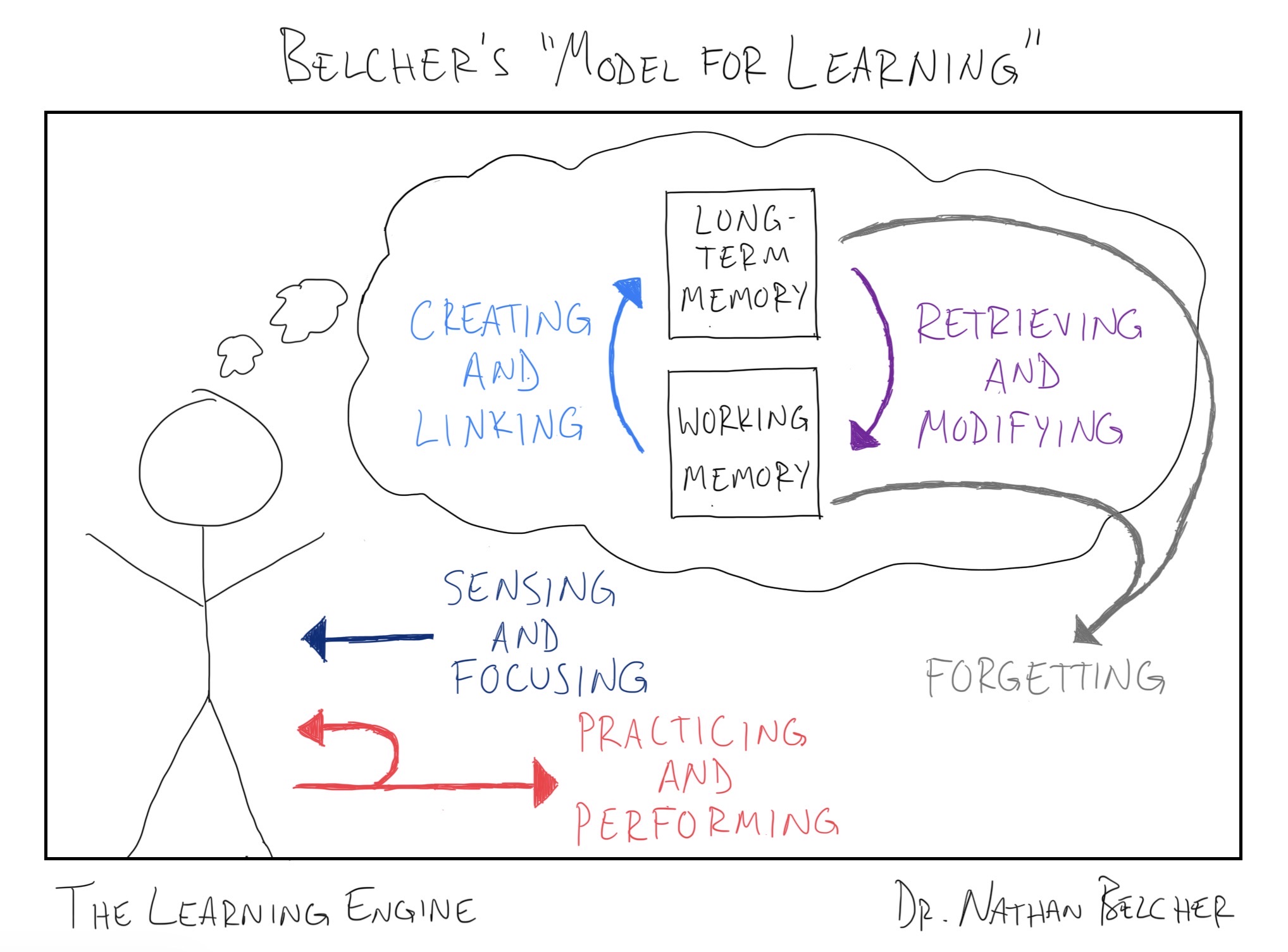
I deeply embedded the principles of learning I had studied in my doctoral work: How memories are created and deepened, what makes practice and performance work, why certain structures lead to deeper understanding. Every topic had three assessments spread across the semester, making students engage with the material multiple times and in different ways — with feedback loops built into the structure.

Impacts of the Changes to the Course

When I started, about 35 students took AP Physics C each year — the top students who already excelled academically. The course had barriers that kept most students out.

Over the next five years, the school expanded access. By my final year, enrollment in AP Physics C had grown to roughly 85 students. These students included more than top performers; many who never expected to succeed in AP Physics C were now enrolled and thriving. Despite tripling the number of students — and including students who wouldn't have qualified under the old system — the results on the AP Physics C exams remained very strong.

The students did the work; they deserve the credit. However, the structure I built gave them a clear path to success — a path that worked regardless of how much physics background they brought into the course. The system created room for students who were willing to work hard but needed a better approach to learning.

Why This Matters for Learn21

Rebuilding the AP Physics C course taught me an idea that I now believe deeply: A good system expands what's possible for everyone — giving more people a path to growth.

Learn21 is built on the same principles I used with the AP Physics C course. You will learn theory and apply the system to a real project in your own life. By the end of 21 days, you'll understand how learning actually works — and you'll have proven the system to yourself through your own results.

The first cohort begins Thursday, February 5th.

Learn more and reserve your spot here!

If you have questions I haven't answered, simply reply to this email — I read and respond to every one.

[If you want to see the exact breakdown of the schedule, use this link.]

All the best!

Nathan


If you want to get a preview on some of the foundational ideas in Learn21, check out this essay: That’s How Learning Works?!?! A Comprehensive Model for Understanding the Learning Process.

600 1st Ave, Ste 330 PMB 92768, Seattle, WA 98104-2246
Unsubscribe · Preferences

The Learning Engine

We teach you the principles of learning, helping you understand and apply the principles of learning in your leading, coaching, and teaching. By using the principles of learning, your leading, coaching, and teaching will be more effective!

Read more from The Learning Engine

The Learning Engine 9 June 2026 Description, Explanation, and Prediction: The Step-Changes at the Heart of Leadership Your post-observation conversation with a teacher is happening in a few minutes, so you gather your notes. You had reviewed the student performance dashboard before walking into the classroom; an AI agent had flagged the students for this teacher as underperforming on reading comprehension for three straight months. Your observation showed the same pattern: Students were...

The Learning Engine 2 June 2026 Your AI Agent Found a Pattern; Now What? The Instructional Leader’s Role in Connecting Solutions to Your Context Your district’s new AI agent is now connected to a student performance dashboard. You ask the AI agent to find patterns in the dashboard; one of the patterns is that students seem to be underperforming on reading comprehension. Without checking on the students and teachers, you ask the AI agent for recommendations. The AI agent answers quickly and...

The Learning Engine 28 May 2026 One Surface Issue, Two Underlying Challenges: A Diagnostic for Every Instructional Leader Your conversation with a teacher looked productive. The teacher was engaged, asking good questions and leaving with a clear next step. You sat with the notes after the conversation, feeling a disconnect between the productivity in the conversation and what would happen next. There was a pattern from the previous three times together – productive-looking conversations with...